
5.2 Initiativen und Netzwerke
Research Schools der Fakultät für Architektur und Raumplanung
Mit den Research Schools stärkt die Fakultät ihre wissenschaftliche und internationale Profilbildung im Doktoratsstudium. Aufbauend auf der TUW Doctoral School ergänzt sie das bestehende Angebot durch fachspezifische Formate wie Kolloquien, Konferenzen, internationale Peer-to-Peer-Seminare und Sounding Boards. Ziel ist es, thematisch gebündelte und international ausgerichtete Doktoratsprogramme und -kollegs weiterzuentwickeln und Doktorand:innen stärker zu vernetzen.
After a successful pilot year, the Research Center for New Social Housing is establishing the New Social Housing Programme for Doctoral Candidates in 2026. The programme seeks to establish an interdisciplinary setting around social housing themes and looks for a connection of international and local perspectives.
Highly dynamic political, social, ecological, and political transitions bring a number of challenges to the provision of housing today. The current global housing crisis is stimulating political interest and a broad public debate on housing issues and practical solutions. As a complex research field, housing includes the design of buildings, housing as a form of practice, and housing regimes and policies but, also, an ideological and epistemological component. Housing studies at the intersection of basic and applied research require new transdisciplinary methodological approaches and perspectives across positions of Global North and South. In view of these challenges and demands, the following questions arise: How do we as housing researchers/designers approach the research–practice gap in housing and develop methodologies across disciplinary boundaries? What are the necessary forms of knowledge in housing design, policy, and everyday life that need to be considered in housing research? How do we engage in a global comparative approach across Global North and South addressing the specificity of housing to advance in housing studies?
Coordinators:
Dr. Judith M. Lehner, Research Center for New Social Housing, future.lab, E285-01, TU Wien
Dr. Bernadette Krejs, Research Unit Housing and Design, E253-2, TU Wien
You can find further information about the Research School here.
Thematic scope: Socio-ecological transformations, architecture and planning
Architecture and spatial planning are essential to scientifically grasp and practically achieve socio-ecological transformations. They produce important transformation knowledge in transdisciplinary processes and aid the realization of much needed transformations towards greater sustainability. The related amalgamation of research and praxis, however, creates a significant challenge regarding academic qualification and scientific excellence, making doctoral research a balancing act of producing outputs for the academic community (i.e., scientific knowledge) and the praxis community (i.e., societal impact). The Research School tackles this issue.
The Research School invites applications from doctoral students whose dissertation projects address questions of socio-ecological transformation from a variety of angles, ranging from analytical perspectives on the sustainability of infrastructures, space and place to concrete design or interventionist approaches to the transformation of the built environment, as well as research delving into the transformation of architecture and planning regarding governance, practice, instruments, methods, education, or similar. It hence welcomes projects that deal with issues such as efficiency and sufficiency, just transitions, urban obsolescence and transformative innovation, re-use and circularity, or sustainable urban and rural development, and view them through a decidedly architectural and/or planning lens.
Coordinators:
Lorenzo De Chiffre, Elisabeth Leitner, Margaret Haderer and Johannes Suitner
You can find further information about the Research School here.
The Research School „AI in Architecture, Planning, and Environment“ invites applications from doctoral students whose dissertation projects address questions at the intersection of artificial intelligence and the disciplines of architecture, spatial planning, and environmental research — whether engaging AI as an applied method, a design instrument, a subject of critical inquiry, or a governance challenge. It welcomes research that deals with AI in architecture, planning, and environmental transformation, including but not limited to: generative AI and large language models in architectural design and creative content generation; machine learning for spatial prediction, land use analysis, and planning analytics; computer vision and image-based methods for built environment analysis; ML-based building performance simulation and environmental modelling; natural language processing for knowledge discovery in planning and policy documents; critical and governance perspectives on algorithmic decision-making in spatial disciplines; AI in participatory design and public engagement processes; and data ethics, algorithmic bias, and accountability in architecture and planning. The application period runs from May 10 to June 20, 2026.
The Research School is intended as a three-year program that offers doctoral candidates at the Faculty of Architecture and Planning a structured support program to help them navigate the scientific expectations of their qualifications. It brings a group of doctoral candidates with similar research interests and thematically comparable dissertation projects together to create a critical mass of knowledgeable scholars who inspire, empower and help each other in pursuit of their doctoral degree. Senior coordinators and mentors provide participants with practical skills that help them on their way to their doctoral degree and create a platform for thematic exchange and mutual learning.
Coordination: AIAPE Competence Center for AI in Architecture, Planning, and Environment
You can find further information about the Research School here.
Doktoratsinitiativen an der Fakultät für Architektur und Raumplanung
An der Fakultät für Architektur und Raumplanung gibt es unterschiedliche Initiativen die zu spezifischen Themen forschen und sich unter anderem an Dissertat_innen richten.
Das EX³-Programm ist eine Junior-Forschungsinitiative mit Fokus auf experimentelle Ansätze in der Transformation von Raum, Architektur und Planung. Die Initiative vereint Doktorand_innen verschiedener Forschungsfelder der experimentellen Stadtentwicklung.
Forschungsschwerpunkte
Im Zentrum stehen Themen wie Lern- und Innovationsprozesse, experimentelle Governance, urbane Mobilitätstransformation, Suffizienz in der Stadterneuerung und taktischer Urbanismus. Diese Bereiche werden durch verschiedene methodische Ansätze erforscht.
Struktur
Das Programm basiert auf drei thematischen Workshops zu Academic Excellence, Transdisciplinarity und Research Impact. Ein dreitägiger Writing Retreat und ein internationales Kolloquium ergänzen diese Kernelemente.
Ziele und Perspektiven
Besonderes Augenmerk liegt auf der Entwicklung transformativer Kompetenzen und der Etablierung neuer Ansätze der Peer-Kultur in der Doktoratsausbildung.
Kontakt: Johannes Suitner | Margaret Haderer
Das Doktoratsprogramm New Social Housing ist eine internationale Forschungsinitiative zur Förderung exzellenter Doktorand:innen im Bereich des sozialen Wohnbaus. Das Programm fungiert als parallele Struktur zur formalen Doktoratsausbildung an den Heimatinstitutionen der Teilnehmenden und bietet eine Plattform für interdisziplinären Austausch.
Partnerinstitutionen
Die Initiative wird in Zusammenarbeit mit der Politecnico Milano, der Universidade de São Paulo, der London School of Economics und dem Tata Institute Mumbai durchgeführt. Diese internationale Vernetzung ermöglicht einen breiten Austausch von Wissen und Erfahrungen im Bereich des sozialen Wohnbaus.
Struktur
Die Aktivitäten umfassen regelmäßige Vor-Ort-Treffen mit Workshops und Writing Retreats, forschungsgeleitete Online-Lehre in Form von Webinaren sowie eine internationale Summer School. Die teilnehmenden Doktorand:innen profitieren von Co-Supervision und Peer-Learning-Formaten.
Ziele und Perspektiven
Das Programm zielt auf die Stärkung internationaler Kooperationen und die Förderung des wissenschaftlichen Nachwuchses. Als Pilotprojekt strebt es die Entwicklung nachhaltiger Strukturen für internationale Doktoratsausbildung an.
Kontakt: Judith Lehner
Mehr Informationen
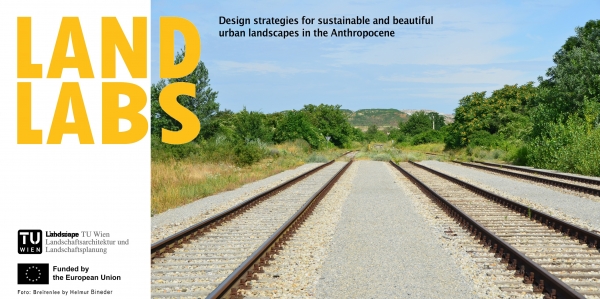
LANDLABS - Landscape Laboratories: Design strategies for sustainable and beautiful urban landscapes in the Anthropocene
Direction
The Doctoral Network "LANDLABS" is a research initiative funded by the European Union under the Marie Skłodowska-Curie Actions. Operating across six landscape laboratories throughout Europe, LANDLABS explores new perspectives on the interconnectedness between humans, animals, plants, water, air, soil, and technologies. Through an innovative site-based, research-through-design approach, the network offers young researchers the opportunity to contribute to the critical and urgent issue of the green transition of cities, aligning with the Europeåan Green Deal and the United Nations Sustainable Development Goals.
Consortium Partners
LANDLABS unites researchers from several esteemed institutions, including Leibniz University Hannover, Aarhus School of Architecture, UiT The Arctic University of Norway, University of Ljubljana, University of Porto, and TU Wien. The consortium also collaborates with associated partners from municipal planning departments, fostering a comprehensive approach to sustainable urban landscape design. citeturn0search0 Associated Partners The network collaborates closely with municipal partners from various cities, including the City of Vienna, City of Hanover, City of Aarhus, Municipality of Tromsø, Municipality of Piran, and Municipality of Porto. These partnerships facilitate practical engagement and the implementation of innovative design strategies within diverse urban contexts.
Goals and Perspectives
LANDLABS aims to foster deep engagement with specific sites in collaboration with local municipal planning departments and stakeholders. The primary goal is to explore new perspectives on interconnectedness and to test innovative design strategies for sustainable and beautiful urban landscapes in the Anthropocene. Each site, significantly shaped by human activity, serves as a landscape laboratory where PhD fellows develop and implement design interventions as a central part of their research.
Structure
The doctoral training within LANDLABS is structured into two main phases. In the initial two-year period, each doctoral candidate focuses primarily on their individual landscape laboratory site and related theoretical frameworks. In the third year, the six PhD fellows collaborate in a virtual PhD lab on joint tasks, aiming to develop transferable theories, evaluation criteria, and design strategies for sustainable and beautiful urban landscapes in the Anthropocene.
Contact
Susann Ahn
https://landlabs.eu/
Photo credit: Helmut Bineder
Netzwerke
Die Fachschaft Doktorat der TU Wien vertritt Interessen von Doktorand_innen, handelt in Gremien und unterstützt und berät in Studien- und Forschungsangelegenheiten, bieten Workshops und Sozialangebote. Die Fachschaft bietet Orientierungsprogramme und Feste für Doktoratsbeginner_innen. An der Fakultät für Architektur und Raumplanung bieten die semesterweisen Doktorand_innen Kolloquien die Möglichkeit für Austausch und Vernetzung. In der Studienrichtung Raumplanung gibt es einen Doktorand_innen-Stammtisch.